
THE LAST MANILANERS

TREATMENT
A. WORKING TITLE
THE LAST MANILANERS
B. LOGLINE
You cannot teach gratitude, unless you have experienced gratitude. That’s a very important thing, and this is a story of gratitude.
C. CHARACTERS
Margot Pins-Kestenbaum (89yrs old)- Margot is one the first of three Manilaners introduced in this documentary series. Margot was born at the year 1931 in Breslau, Germany. She had a very wholesome and happy childhood that she spent with her best friend Lotte, but all of this unfortunately changed when the Nazi regime implemented laws and norms that targeted Jewish lives which made Margot’s family to migrate to the Philippines
Lotte Cassel-Hershfield (89yrs old)- Lotte is introduced alongside Margot at the very beginning of this series. Lotte was also born 10 days apart from her cousin Margot on Breslau, Germany. Lotte and Margot spent a lot of time together which helped them establish a very strong connection that was eventually challenged when their lives was endangered because of the actions of the Nazi regime. Lotte’s family eventually fled to the Philippines a month after Margot and her family also moved which reunited them.
Max Weissler (90 yrs old)- Max is introduced in the 2nd half of this documentary series. Max and his family had the same reasons why they came as refugees to the Philippines as Lotte and Margot’s family, but Max came from other European countries controlled by the Nazi regime. The main difference of the life of Max from both Lotte and Margot was the way his parents acted. Max’s parents always fought with each other, which resulted in Max staying with his aunt most of the time. All of this bickering and fighting resulted in Max maturing in a rate that was unfortunately not normal for a kid at his age. Regardless of his family Max still found friends in the Philippines and even named himself a “kanto boy”, because Max would always hangout with his friends in the streets and play.
D. WHO WHAT WHEN WHERE
This documentary film was released on January 27,2020 and mainly revolves around the lives of Jew refugees whom were merely children when they and their families experienced unjust discrimination and prosecution by the Nazi regime.
E. 1ST ACT
This documentary film starts off with the introduction of Margot Pins-Kestenbaum and Lotte Cassel-Hershfield. This first act slowly shows and describes unfortunate rise of racial discrimination towards Jews, torture of Jews, and even the death of many Jews because of the implementation of the Nuremberg Laws in 1935. This sudden change in the environment of Germany meant that Margot Pins-Kestenbaum and Lotte Cassel-Hershfield’s could not remain in Germany for if they stayed it would certainly end in death. Both Margot and Lotte’s family struggled to find a place to go until, Manuel L. Quezon currently leading the Philippine government even with all the risks allowed and welcomed the Jews to the Philippines, while the whole world ignored the calls of the Jewish people for help.
F. 2ND ACT
The 2nd act of the documentary both includes the 2nd and 3rd episode. The 2nd episode revolves around the journey and experiences of Margot Pins-Kestenbaum, Lotte Cassel-Hershfield’s, and Max Weissler. The situation in Germany was only getting worse with more frequent Jewish targeted attacks occurring like the Night of Broken Glass. This made the families of Margot and Lotte scramble to travel in the Philippines sooner. Lotte and her family travelled one month earlier than Margot to the Philippines but sooner rather than later they reunited again starting their new lives in the Philippines. A few years after Margot and Lotte reunited, Max came to the Philippines which also started his new life with Filipino people.
Margot, Lotte, and Max described the Philippines as a paradise and a huge open playground in where they could play with their Filipino friends, but their lives changed when the Japanese attacked during the 1940s. From then on the Philippines turned into a battlefield which resulted in everyone living their lives with constant fear. Margot, Lotte, and Max witnessed acts of violence and war like the infamous Bataan Death March
The 3rd episode in this documentary series revolves around the hardships, fear, sadness, and all of the unfortunate effects of war to the people affected. Margot, Lotte, and Max individually tell stories of their different experiences and stories in where starvation and sleepless nights were rampant because of the war currently ongoing in the Philippines. They described that the suffering they were experiencing was equal to those of the Filipinos stuck between the same war-zone and being Jewish, German, or Polish did not matter because everyone suffered.
G. 3RD ACT
The 4th episode of the documentary series revolves around the official end of the war in the Philippines on March 3, 1945 when the joint military force of Americans, Filipinos, and even Manilaners worked together to drive out the Japanese. Margot, Lotte, and Max shared their experiences celebrating in the streets and giving rewards like liquor to soldiers passing by. However, eventually Margot, Lotte, and Max had to leave because the Philippines had to rebuild and they knew Jew refugees would not be the main priority.Living in the Philippines for eight years has remarkably affected Margot, Lotte, and Max that they consider themselves Filipino. The values they learned in the Philippines have been passed down to their children and to other people as well. However, living eight years in the Philippines meant they did not know what happened to their fellow Jews back in their homes by the hands of the Nazi regime
Even with everything that has happened to them they still consider their time spent in the Philippines as one of the best moments of their entire lives. Margot, Lotte, and Max will always feel an overwhelming amount of gratitude to the Philippine government led by Manuel L. Quezon at that time. The three of them eventually moved to other countries and have been separated from each for a long time, but their connection and gratitude to the Philippines will never ever fade.
TECHNICAL CODES
CAMERA SHOTS
ESTABLISHING SHOT

This shot is usually the first scene seen helping to establish the scene’s environment and location.
WIDE SHOT

This shot usually shows the entire subject, while also still seeing the environment the subject is in.
EXTREME WIDE SHOT

The extreme wide shot is usually used to show the subject, and the entire area of the scene in the same shot.
MID SHOT

This shot is from the waist up focusing more on the subject
MEDIUM CLOSE UP

This shot is usually from the chest up of a subject.
CLOSE-UP SHOT

The extreme close-up shot usually fills the frame with your subject showing emotions and reactions.
EXTREME CLOSE UP-SHOT

This shot usually shows specific details of a character in a close-up
TWO SHOT

This shot usually shows two characters interacting with each other in a shot
OVER THE SHOULDER SHOT

This shot usually shows two people talking with each other to capture a conversation
POINT-OF-VIEW SHOT

This shot shows what the characters are seeing in their point-of-view
LOW ANGLE SHOT

This shot is the polar opposite of the high angle shot, usually showing power of a subject.
TOP SHOT

This show usually shows the setting of the subject from above.
HIGH ANGLE SHOT

This shot is the opposite of the low angle shot, usually showing the subject as smaller or insignificant
CUT IN SHOT

The main purpose of this shot is to show something clearer already present in the scene.
LIGHTING
3 POINT LIGHTING

Key Light
The Key lights main purpose is to give a primary source of light that maybe artificial or natural
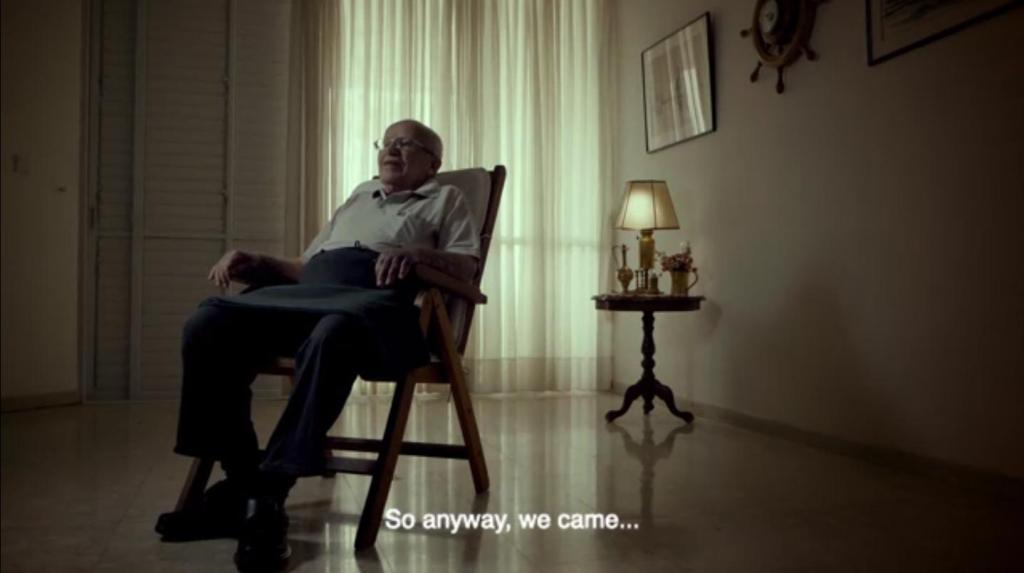
Back Light
The main purpose of the Back light is to separate the main subject from the rest of the backround

Fill Light
The purpose of the Fill light is to cancel out any shadows made by contrasting light sources
IMAGERY

This documentary used a lot of charcoal like imagery to illustrate and show different stories coming from Margot, Lotte, and Max which helped the audience to not only visualize their stories but also experience them with complex and realistic imagery.
REFLECTION
This documentary series has honestly opened my eyes to the unfortunate effects when an unjust evil regime starts implementing laws that allow and support discrimination, violence, and other sinful acts towards people like the Jews. I have always known that there was a lot of substantial history between the Germans and the Jewish people especially in the time leading to and during World War 2, but I never knew that our government back in the day played a vital role in saving hundreds of Jewish lives from the hands of Germans.
The series really taught me that gratitude can never be taught, unless you have experienced gratitude. I always knew that we Filipinos have the innate ability/want to be generous and this documentary really proved my belief because Margot, Lotte, and Max kept on talking about how even though they were foreigners their Filipino friends treated them as friends and family.
The decision that President Manuel L. Quezon made to let Jewish refugees in to our country even though America did not want us to take in refugees made it clear that our country was on its steps to be independent of other foreign natures like America. However, I personally believe that with our national government today, decisions like the one President Quezon made back in the day would not happen anymore because our country focuses too much on its own agendas and it has made our country slowly turn selfish. I know that certain actions and words coming from our country directed towards countries like Israel has insulted God and as a result disasters like more floods and eruptions occur on our nation day by day.
I just hope that more people know the importance of gratitude because gratitude is not only an emotion, it can also be a weapon to fight any evil.

